Sunday, July 31, 2011

The Kinnie, July 30th 2011

A Brown caught on a glass bead-head nymph
A new spot was found on the Kinnickinnic that looks to promise large fish. On a sweltering day with high humidity, the fishing was not fantastic, but the one brown pulled from a shallow pool was of some size.  The trout taken was in a prime lie (right outside of the ideal current, but hidden).  There were plenty of places where the river bottle-necked creating turbulent deeper pools on the end of the neck. At the end of the pool, or the tail, is where bigger trout like to hold.  

A nice Brown before release
 There were also many good visible seams in the water where trout wait just outside of the turbulence and wait for food to drift past.  There were a few fish rising, but none would rise to the variety of flies offered.  The trout taken was caught on one of my glass bead-head nymphs I  tied this past winter.


A very large, deep pool
I am excited to return to this new spot in the future.  At the end of the day, I found an extremely large and deep pool with a nice current and many fish rising.  By this point in the day however, I was out of my nymphs, sinkers and strike indicators and too many kayakers were passing by and stirring up the waters.  I am eager to see what this spot tholds in the
future.

Thursday, July 28, 2011

Painted Turtle Photo

DNR turtle information poster. Painted turtle photo by T. Keyler

One of my photos was used for the DNR's 'Turtles of Minnesota' poster. I took the shot of the painted turtle this spring at the  Minnesota Landscape Arboretum in Chanhassen, MN.  The front helps with identification of these turtles.  The back of the poster educates readers about MN turtle species and what they can do to help their status.

Wednesday, July 27, 2011

Cascade River State Park


The Northshore is home to the most beautiful rivers in Minnesota.  These rivers offer spring steelhead and Kamloops rainbow runs,  fall Pink salmon runs and decent trout fishing at points.
Upper Cascade

Cascade River State Park offers camping within walking distance of the falls. The Superior Hiking Trail runs through the park, and this can be followed to many of the fishing locations.  
Columbine grows on the edge of the falls
To fish for trout in the park, you must hike above the falls (unless it is spring and you're fishing for kamloops).  The river widens considerably and the water slows. 


The author fishing a deep hole
There are a few decent holes that I like to fish, and plenty of fish hold behind structure in the river.  The areas that move at about 1'/sec are right for these trout.


A small Brown trout


I have been successful with both small trico spinners and small bead-head nymphs.  These waters hold small rainbow and brown trout. 

Rainbow trout taken on a trico

Rainbow release

Brigitta with a Luna moth
In the evenings, ir you're lucky, you may come across a Luna moth or a polyphemus moth fluttering about. 

View from Lutsen mountain in the fall

In the fall, the Pink salmon return to the mouth of the Cascade to spawn.  The males have a distinctive humped back that forms upon entering Superior.  Post spawn, the salmon die.  Egg patterns work best for these fish.
The author with a humpie on line
Male Pink salmon

Saturday, July 9, 2011

Salmon Genetics

I just finished this paper for my Evolution Grad course: "Euro-American Influence on the Evolutionary Trajectories of the Pacific Salmon".  


A sample figure from the paper


Monday, June 6, 2011

Mississippi River Valley

Large Timber Rattlesnake

The Mississippi River Valley in South Eastern Minnesota is one of Minnesota's greatest attributes.  My father, Dr. Daniel Keyler, Dr. Phil Cochran, and I have been part of an ongoing study in Timber Rattlesnake populations in South Eastern Minnesota.  This Sunday, temperatures were in the mid eighties and the humidity was high. We managed to find 8 Timbers on our hike.  Most were 2-3 year old juveniles but 2 or 3 were gravid females.  Finding both juveniles and older snakes in an area is a good indication of a healthy population. 
 We also stumbled across a few black widow spiders.  The female was encasing a june bug while 2 males sat nearby.
A Royal Wulff protrudes from this Brown's jaw
In the afternoon, I headed off to a local stream to do some fly fishing.  Large browns were rising and taking small dry flies such as Royal Wulffs and black gnats. These trout were in slower water than I am used to, and would arise from the depths of cloudy pools.  I caught 2 or 3 fish, but many fish rose to my flies and missed the fly.  Even though I only took 2 fish, seeing the rise makes it very enjoyable.

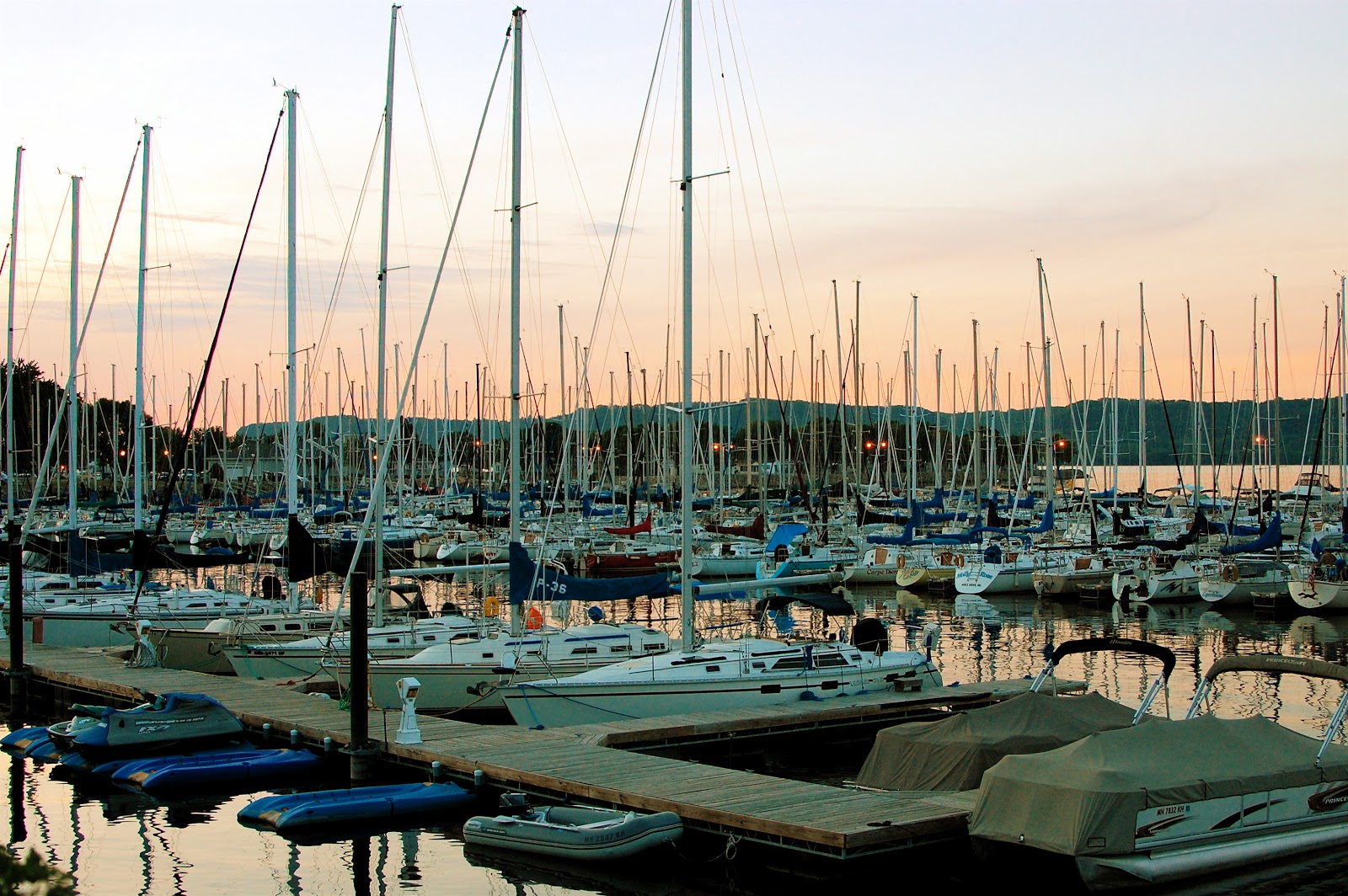
On the drive home we saw the sun setting over the river while the fishing boats cruised back to their docks.  I also stopped by the harbor in Lake City (the township where waterskiing was invented) to take a photo of all the sail boats that were docked.


Lake City Harbor

 After the sun set, there was a june bug hatch and our windshield became so encrusted with bug juice that we had to stop in Hastings and wash the car off.  We got home late that night, but it was a an ideal day in the Mississippi River Valley.
June bug-covered windshield

Thursday, May 26, 2011

Kinnickinnic State Park

Essential gear for small river fishing
The Kinnikinnic, AKA the Kinni, is a Class 1 trout stream located in River Falls, WI.  Kinni State park offers 9 stream entry locations, 7 of which classify trout as abundant, and 2 as common.  There are brown trout and brook trout in these waters, brookies being the native species, but browns being far more common.
Picturesque Kinny
I use a 4wt rod and reel and an assortment of small nymphs and dry flies when fishing these types of waters.  I generally look for slower moving waters (1'/sec) and deeper pools to fish.  When nymphing, I use a small oval shot about a foot above the fly (depending on depth of pool), then a strike indicator a few inches above that.  For dry flies, I simply use a 16" 4lb tippet to give the fly maximum mobility.
A large pool that held decent fish
Some midge flies I tied


All trout were taken on a assortment of midge flies I had previously tied.  I used a variety of dubbing colors and different flash on these midges, but all used small, red glass beads for heads.  There is a previous entry on this blog for tying these midge flies.


First nice sized brown trout of the day

I caught 4 trout, with 10" being the largest for the day.  This trout was taken in faster moving water, and was holding behind a large rock.  I drifted the nymph past the rock multiple times until I got a hit.

Second, smaller brown.  Four browns taken that day
Late fern fiddle heads


Fishing aside, Kinnickinnic State Park offered a variety of flora, and an enjoyable way to spend the afternoon.  I enjoyed it so much, I bought a WI state  park pass for the season.  I will certainly be returning to the Kinni.


Tuesday, May 24, 2011

Boundary Waters, Spring 2011

Sun Setting on Fourtown Lake
This year, we headed up to the BWCA earlier than usual.  We entered on May 14th and put-in on Fall lake and made a counter clockwise loop to Mudro lake. This route included 14 portages along the way.  The weather was spectacular with temps in the 70's during the day and dropping to 40's-50's during the night.  The bugs were minimal until the last day.

Courtney and Mark on Basswood
Our 6 day counter-clockwise route
We canoed through Fall lake and camped there for the evening.  We were eager to get out of this lake however due to it being a motorized lake and it also being fishing opener.  We then paddled through Newton and into Basswood. Basswood was gorgeous and although it too is a motorized lake, we saw no other boats, canoes or motored.


.
 A loon observes us

We spent a night on Basswood, and then continued on to Tin Can lake and then to Horse lake where we spent 2 nights.  Along the way we saw many loons and other water fowl, such as mergansers.
Common Merganser


We managed to do quite a lot of fishing during our trip and caught A LOT of pike.  There were only 2 pike around 30", but they were a ton of fun to catch.  Pike were exclusively taking top water lures in shallow bays (sometimes as shallow as 8"). When taking lures, these Pike were explosive and would erupt out of the water.  Most pike were caught on a Zara Spook with a walk the dog motion.  We also caught many pike while bobber fishing.  When we would reel in the bobber to do a worm-check, the Pike would strike at the bobber and often become hooked elsewhere on the body.
I managed to catch myself and a Pike
Unfortunately, during a standard hook removal of a Rapala from a landed Pike, I hooked my finger.  After an hour, a needle-nose, and a fillet knife, the hook was removed.  I recommend always using pliers or forceps when removing hooks. Lesson learned.

A strong afternoon's work

Walleye were caught on slip bobbers with hook and worm or with a lead-head jig with a grub jigged along the bottom.  They were fantastic eating.


Author with a nice Smallie
Mark and a nice Pike
The BWCA also offered great photo opportunities and I truly enjoyed taking hikes in the afternoons and evenings.

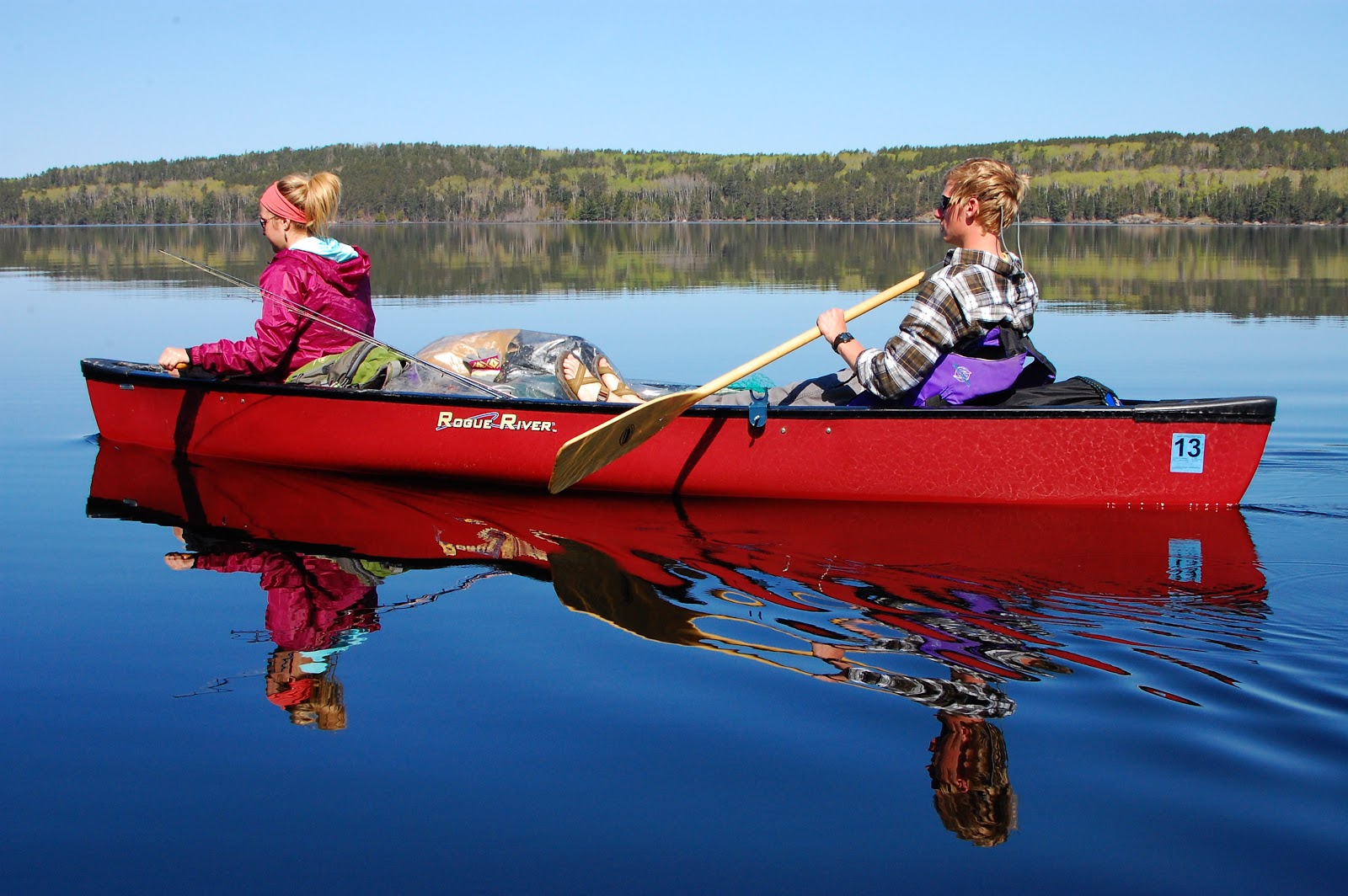
Great reflections

Fourtown reflection

Trail near camp at Fourtown